Request Proposal
Home / Section / Current page

Loading detail page title placeholder

Loading detail page summary placeholder text.

Primary actionSecondary action
What we doIndustriesInsightsWho We AreSuccess Stories
Solutions
All SolutionsContract StaffingTemp StaffingGovernance, Risk & Compliance (GRC)Contingent StaffingEmiratisation (UAE)Executive SearchGlobal Mobilisation
RPOPermanent RecruitmentRemote & Offshore StaffingPEO & EOR (Region)Last MileManaged Services
Technology Solutions
Recruitment Agency Locations
Corporate Services
All Corporate Services
Business Setup in UAE
Business Setup in Saudi Arabia
PRO ServicesUAE Golden VisaTax & AccountingBanking AssistancePayroll ManagementHR Consultancy
AI Studio
AI Studio OverviewAI SolutionsAI Products
AviationEnergyBanking & FinanceFMCGCustomer CareMarketingManagement ConsultingOil & Gas
EducationHealthcareGreenfieldAutomotiveRetailTelecommunicationsMiningAerospace
TechnologyHospitalityMedia & EntertainmentLogisticsManufacturing & EngineeringE-CommerceGovernment & Public Sector
Explore Industries ReportsView all Industries
BlogNewsGuidebooks & ReportsSuccess StoriesEvents & WebinarsCountryPedia
Explore Industries Reports
Our StoryAwards & RecognitionInvestor RelationsESG & Corporate PoliciesBrand EcosystemLeadership & TeamPartner ProgramWork at TASCInternship ProgramContact Us
Request Proposal
  1. Home/
  2. Insights/
  3. Blog/
  4. UAE Corporate Tax Record Keeping Requirements and What Businesses Need to Maintain

UAE Corporate Tax Record Keeping Requirements and What Businesses Need to Maintain

Daniyal Chishti|14 October 2026

  • UAE

Table of content

  1. The Statutory Retention Rule: Article 56 Requirements
  2. Core Categories of Records Businesses Must Maintain
  3. Summary of Key Document Types & Retention Terms
  4. Digital Record Keeping and Data Security Standards
  5. Consequences of Non-Compliance
  6. Secure Your Tax Compliance Framework
  7. Frequently Asked Questions

Get help to setup workforce or business

Get monthly emails with key insights on trends, compliance, and staffing tailored for your workforce or business setup.

Book A Counsltations

Following the enactment of Federal Decree-Law No. 47 of 2022 on the Taxation of Corporations and Businesses, the UAE developed a systematic, self-assessing tax system. Within this tax system, submission of the corporate tax return becomes just one of the legal responsibilities of an organization; it is equally essential for maintaining the supporting documents behind each number reported.

Accounting net profit serves as the starting point in determining taxable income in accordance with the directives of the Federal Tax Authority (FTA). This implies that internal accounting documents, commercial agreements, and bank documents constitute the major sources of legal evidence of tax matters. Understanding the rules for record keeping for corporate taxes can assist organizations in developing a solid audit trail during successive tax periods.

The Statutory Retention Rule: Article 56 Requirements

According to Article 56 of the UAE Corporate Tax Law, there are clear mandates with respect to record retention. The legal responsibility to preserve the relevant documents falls on the shoulders of every taxable individual or exempt individual who has to confirm their continuing exemption status.

Key Preservation Rules

The Mandatory 7-Year Period: General accounting records, trial balance, general ledger, and all other transaction-related documents have to be kept for at least 7 years.

  • The Clock of Calculation: The time frame for preservation does not start from the moment when the agreement was signed or when the invoice was issued. The 7-year period will commence after the tax year in which the document was created.
  • Records Related to Long-Lived Assets: Information concerning long-lived assets, including real estate property, may have to be preserved for a longer period of time (from 10 up to 15 years). This is necessary for depreciation adjustments, establishing the original cost, or making any long-term tax adjustments.

For instance, in case of an invoice created in February 2024 for an enterprise that uses the calendar tax year ending on December 31, 2024, the 7-year period will start from December 31, 2024, until December 31, 2031.

Core Categories of Records Businesses Must Maintain

Maintaining a comprehensive document repository requires structuring records systematically across multiple business functions. The FTA expects documentation that directly corroborates income, expenses, reliefs, and structural elections.

1. Financial Statements and Accounting Ledgers

The cornerstone of any tax audit is the primary financial statement set prepared under International Financial Reporting Standards (IFRS) or IFRS for SMEs. Entities must archive:

  • Annual balance sheets, income statements, cash flow statements, and equity schedules.
  • Chart of accounts mapping files and year-end trial balances.
  • Adjusting journal entries, including accrual computations, provisions, and depreciation workings.

2. Transactional Evidence (Invoices and Receipts)

Every revenue item and claimed business expense must be backed by valid commercial evidence. Businesses need to retain tax-compliant sales invoices, supplier purchase bills, customs clearance documentation, and shipping logs. Invoices must clearly reflect the nature of the service or product, commercial terms, and relevant counterparty tax details.

3. Legal Contracts and Governance Papers

Operational expenses and revenue streams depend on underlying commercial terms. Required legal documentation includes:

  • Master service agreements, distribution contracts, and property lease files.
  • Financing agreements, intercompany loan contracts, and interest rate schedules.
  • Board resolutions approving corporate restructurings, dividend distributions, or tax group formations.

4. Transfer Pricing and Related-Party Records

Transactions involving related parties or connected persons undergo rigorous scrutiny. To demonstrate adherence to the Arm’s Length Principle, entities must maintain:

  • Detailed lists of all related-party transactions during the financial year.
  • Transfer pricing documentation, including Master Files, Local Files, and benchmark studies where mandatory revenue thresholds are triggered.
  • Allocation methodologies used for shared corporate overheads or group management fees.

Summary of Key Document Types & Retention Terms

Record Type

Minimum Retention Term

Primary Purpose for Maintenance

Financial Statements & Ledgers

7 Years

Establishes the baseline net accounting profit.

Sales & Purchase Invoices

7 Years

Corroborates revenue recognition and deductible costs.

Bank Statements & WPS Records

7 Years

Proves actual financial settlement and payroll costs.

Transfer Pricing Master/Local Files

7 Years

Demonstrates arm’s-length pricing compliance.

Capital Asset Schedules

10 Years

Tracks long-term asset use and tax depreciation.

Real Estate Property Records

15 Years

Supports long-term property holdings and adjustments.

Digital Record Keeping and Data Security Standards

FTA allows companies to retain the required records in either physical or digital forms, as long as certain criteria have been followed. EDMS is commonly used for this purpose to avoid having problems related to physical storage.

Systems for digital record retention need to have:

  • Data Preservation: Scanned documents have to be retained legibly in non-editable form with all metadata kept untouched (for example, in PDF/A).
  • Fast Access: The records need to be logically indexed to produce the files related to specific transactions quickly.
  • Backups and Redundancy: A geo-redundant cloud-based system avoids data loss due to technical or physical failures.

Consequences of Non-Compliance

There are certain regulatory risks involved with not having a well-designed record-keeping system, in terms of the UAE Tax Procedures Law:

  • Administrative Fines: Fines are imposed directly in case of a violation in keeping required records, starting at AED 10,000 for the first violation and escalating for subsequent violations.
  • Denial of Expense Deduction: If your firm is unable to prove its expenses through original invoices or agreements in the course of an audit, the FTA can deny those expenses, thereby raising the tax liability.
  • Arbitrary Assessment of Taxes: Where the accounting records of your company are not available or are not accurate, the tax authority has powers to assess your taxes according to some arbitrary standards, which usually lead to higher tax assessment.

Secure Your Tax Compliance Framework

Establishing a financial system which is audit-proof needs proper oversight, well-defined documentation procedures, and accounting consistency. Having your ledgers supported by full documentation is the best way to ensure your company does not run into any compliance problems or incur administrative fines.

Consulting tax and accounting experts is the best way to formulate record-keeping practices suitable for your operation.

Frequently Asked Questions

1. Do small businesses qualifying for Small Business Relief still need to keep records?

Yes. Entities electing for Small Business Relief are relieved from calculating complex taxable income adjustments, but they remain legally required to maintain books and financial records for 7 years to prove their revenue remains below the statutory relief threshold.

2. Can records be stored outside the UAE?

While primary financial records and cloud systems can be hosted internationally, the business must ensure that all documents remain directly accessible and can be rendered locally in English or Arabic upon an official request from the FTA.

3. What is the difference between VAT record retention and Corporate Tax record retention?

Standard VAT regulations generally require records to be kept for 5 years. However, because commercial documents such as purchase invoices support both VAT input claims and corporate tax expense deductions, businesses should align their retention policy with the longer 7-year corporate tax requirement.

4. Are physical receipts required, or are digital scans sufficient?

Digital scans are fully acceptable under UAE tax laws, provided the electronic document is a clear, complete, and true copy of the original and can be produced in an accessible format during an audit.

Get help to setup workforce or business

Get monthly emails with key insights on trends, compliance, and staffing tailored for your workforce or business setup.

Book A Counsltations

Daniyal Chishti

Get workforce insights in your inbox

One email a month — trends, compliance updates, and staffing intelligence for the UAE and KSA.

Related Blogs

  • Top 10 Jobs Companies in Qatar Outsource in 2026

    Qatar is investing heavily in a more diverse, knowledge-based economy. Its Third National Development Strategy for 2024 to 2030 aims to raise the share of skilled workers to 46% of the workforce and to have more than 20% of Qataris working in the private and mixed sectors. As businesses grow and compete for skills, many […]
    • Staffing
    • UAE
    Read More
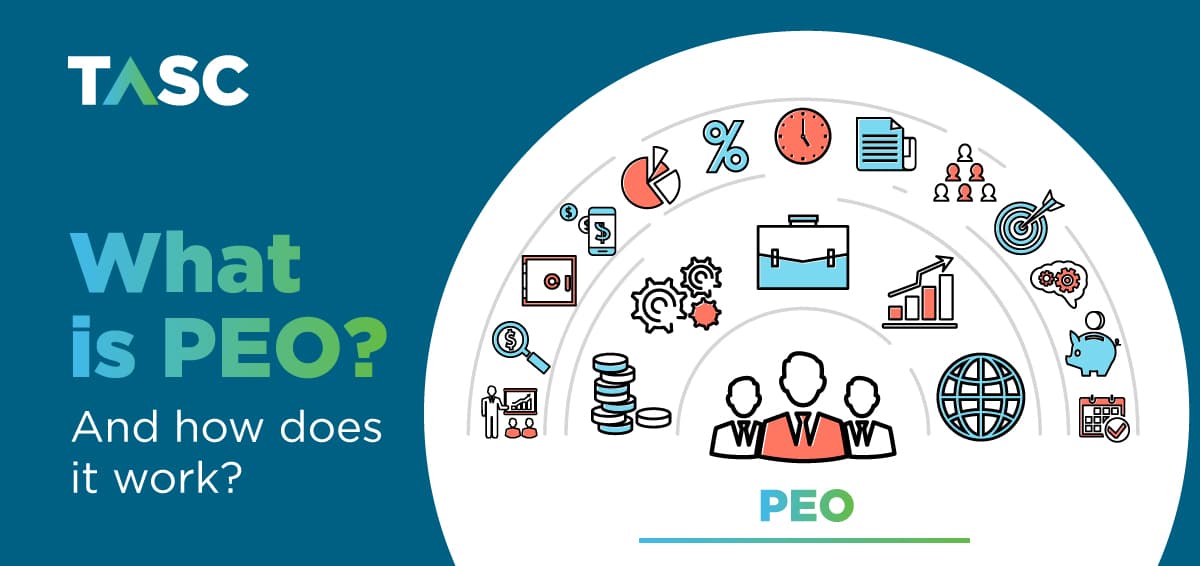
  • What Is a PEO and How Can It Benefit Your Organisation in 2026?

    Hiring people in a new country usually means setting up a local company, registering with the authorities and building payroll and HR processes from scratch. A Professional Employer Organisation (PEO), often called an Employer of Record (EOR), lets you skip most of that. This guide explains what a PEO is, how it works in the […]
    • Staffing
    • UAE
    Read More
  • PRO Services in Dubai: 2026 Guide for Business Setup and Compliance

    Every business in Dubai deals with government processes: licences, visas, work permits, Emirates IDs, attestations and renewals. A Public Relations Officer (PRO) handles these on the company’s behalf. Whether you are setting up a new business or running an established one, good PRO support saves time and keeps you compliant. This guide explains what PRO […]

    • Business Setup
    • PRO Services
    • TASC Corporate Services
    • +1
    Read More

Ready to Build Your Dream Team?

TASC works with organisations that hold themselves to a high standard — where workforce performance directly shapes business outcomes.

Phone

+971 4 358 8500

Email

info@tascoutsourcing.com

Location

Dubai, UAE

Response Time

Within 24 hours

Transform Your Business with

The UAE and Saudi Arabia’s leading workforce, talent, and market entry solutions provider.

Follow us on Social

Dubai HQ

2403, Nassima Tower, Sheikh Zayed Road, Dubai, UAE, P.O. Box: 117495

+971 4 358 8500

info@tascoutsourcing.com

request@tascoutsourcing.com

For Employee Verification

dxbjobs@tascoutsourcing.com

Email your CV

Abu Dhabi

Al Saada Tower, Office 704, C-56 Plot, Al Nahyan Area, Abu Dhabi, UAE

+971 2 671 1956

info@tascoutsourcing.com

Riyadh

Top Talent Consulting Ltd., Building 1, Office No. 4, 1st Floor, Salahuddin Al Ayoubi Street, King Abdulaziz District, Riyadh, Saudi Arabia, P.O. Box: 11452

+966 11 216 6218

info@tascoutsourcing.com

Al Khobar

Al Rashid Towers, Dhahran Road, 2nd Floor, Al Khobar, Saudi Arabia, P.O. Box:34448

+966 11 216 6218

PEOPLE SOLUTIONS

  • Contract Staffing
  • Permanent Recruitment
  • PEO / EOR
  • Payroll
  • HR Consultancy
  • Market Entry
  • RPO

CORPORATE SOLUTIONS

  • Business Setup in UAE
  • Business Setup in Saudi Arabia
  • PRO Services
  • UAE Golden Visa
  • Tax & Accounting
  • Banking Assistance
  • Payroll Management

COMPANY

  • About Us
  • Team
  • Our Locations
  • Careers at TASC
  • Case Studies
  • ESG & Policies
  • Partners

CANDIDATES

  • Browse Vacancies
  • Register CV
  • Tips for Jobseekers
  • Emiratization
  • Internship Program
  • FAQs

RESOURCES

  • Blog & News
  • Industry Reports
  • Newsletters
  • Sitemap
  • Complaints

Learn more about our Alliances and Partnerships.

Manage and customize your email subscription preferences

© Copyright 2026 TASC Outsourcing. All rights reserved.

Terms of UsePrivacy PolicyDisclaimerFraud & Scam AlertESG & Policies